
After Cape Town: Should You Visit Kruger or KwaZulu-Natal?
In my previous article, I compared the Zimbabwean and Zambian sides of Victoria Falls, helping travelers decide which side best suits a first visit. This time, I want to answer another question I am increasingly asked by clients planning a journey through South Africa.
“I’ve already been to Cape Town. Should I go to Kruger or KwaZulu-Natal?”
Until recently, I would barely have hesitated before recommending Kruger. Today, I’m not nearly as certain.
After spending several days exploring KwaZulu-Natal, arriving by cruise into Richards Bay before continuing to Durban, I realized I had underestimated one of South Africa’s most rewarding regions.
That doesn’t mean KwaZulu-Natal replaces Kruger. It doesn’t. Kruger remains South Africa’s definitive safari destination, particularly for first-time visitors whose priority is a classic Big Five experience. But if you’ve already visited South Africa, are travelling as a family, or want to combine wildlife, coastline and culture in a single holiday, I now believe KwaZulu-Natal is often the more rewarding choice.
The Mistake Many Travellers Make
One of the biggest mistakes I see is trying to squeeze every famous destination into a single itinerary. Cape Town, Kruger, the Garden Route, Durban and Victoria Falls all make the shortlist. On paper it sounds exciting. In reality, it often means spending more time in airports, on transfers and unpacking suitcases than actually enjoying South Africa.
The country rewards travellers who slow down. Rather than asking, “How much can I see?”, I encourage clients to ask, “Which combination of experiences will create the best holiday?”
That shift in thinking is exactly why KwaZulu-Natal surprised me. It doesn’t try to compete with Kruger. Instead, it complements everything that makes South Africa so special.
Hluhluwe-iMfolozi: Safari Without the Crowds
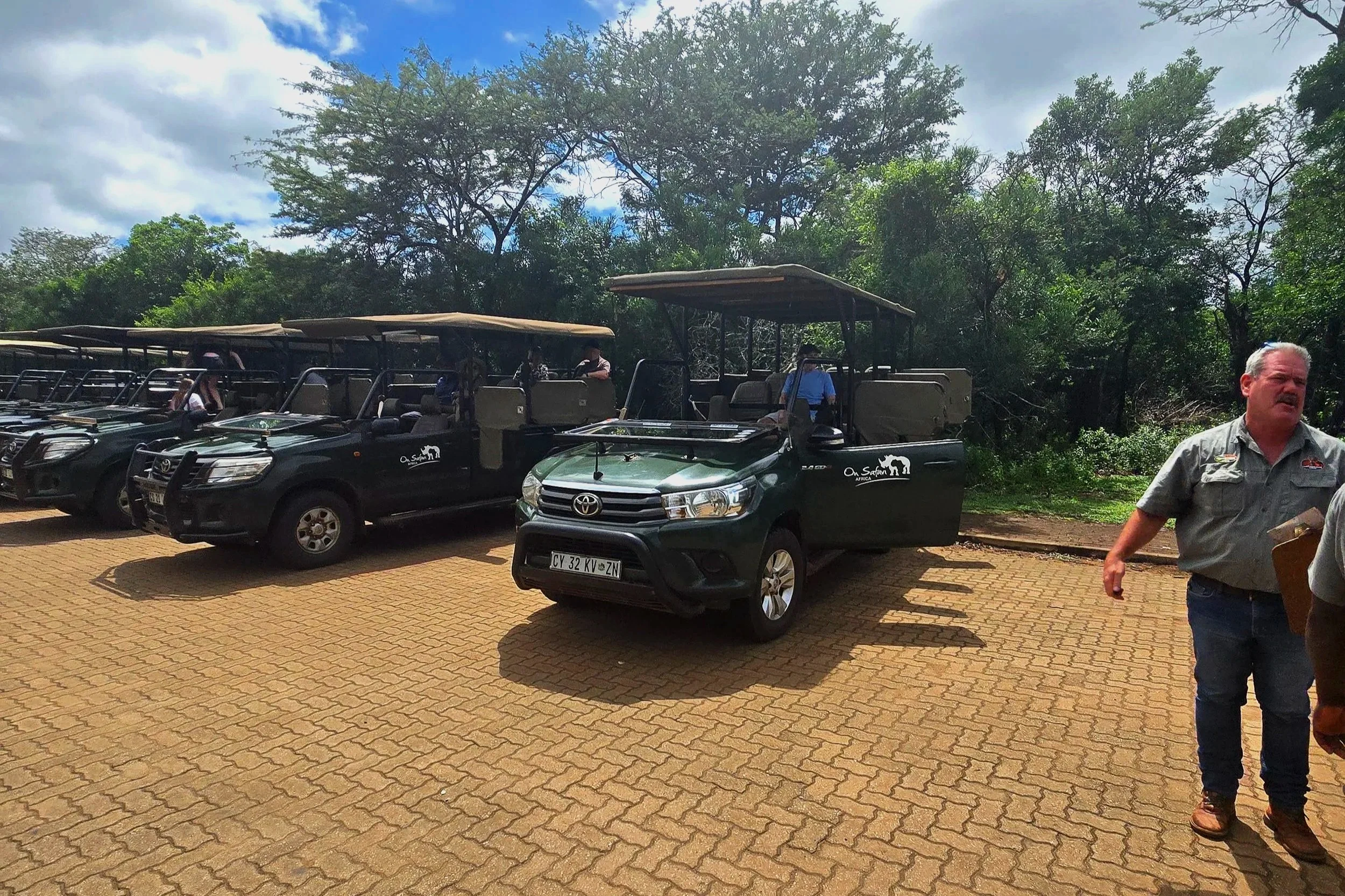
Heading into Hluhluwe-iMfolozi Park just after sunrise.
Established in 1895, Hluhluwe-iMfolozi is one of Africa’s oldest game reserves and played a pivotal role in saving the southern white rhinoceros from extinction. Unlike many private safari reserves, however, it doesn’t feel choreographed.
Our guide explained that only two lions were roaming the vast area we were exploring. We never found them. Instead, we watched elephants emerge quietly from the bush, white rhinos grazing peacefully, buffalo crossing the tracks in front of our vehicle, zebras wandering across the plains and kudu disappearing into the trees.
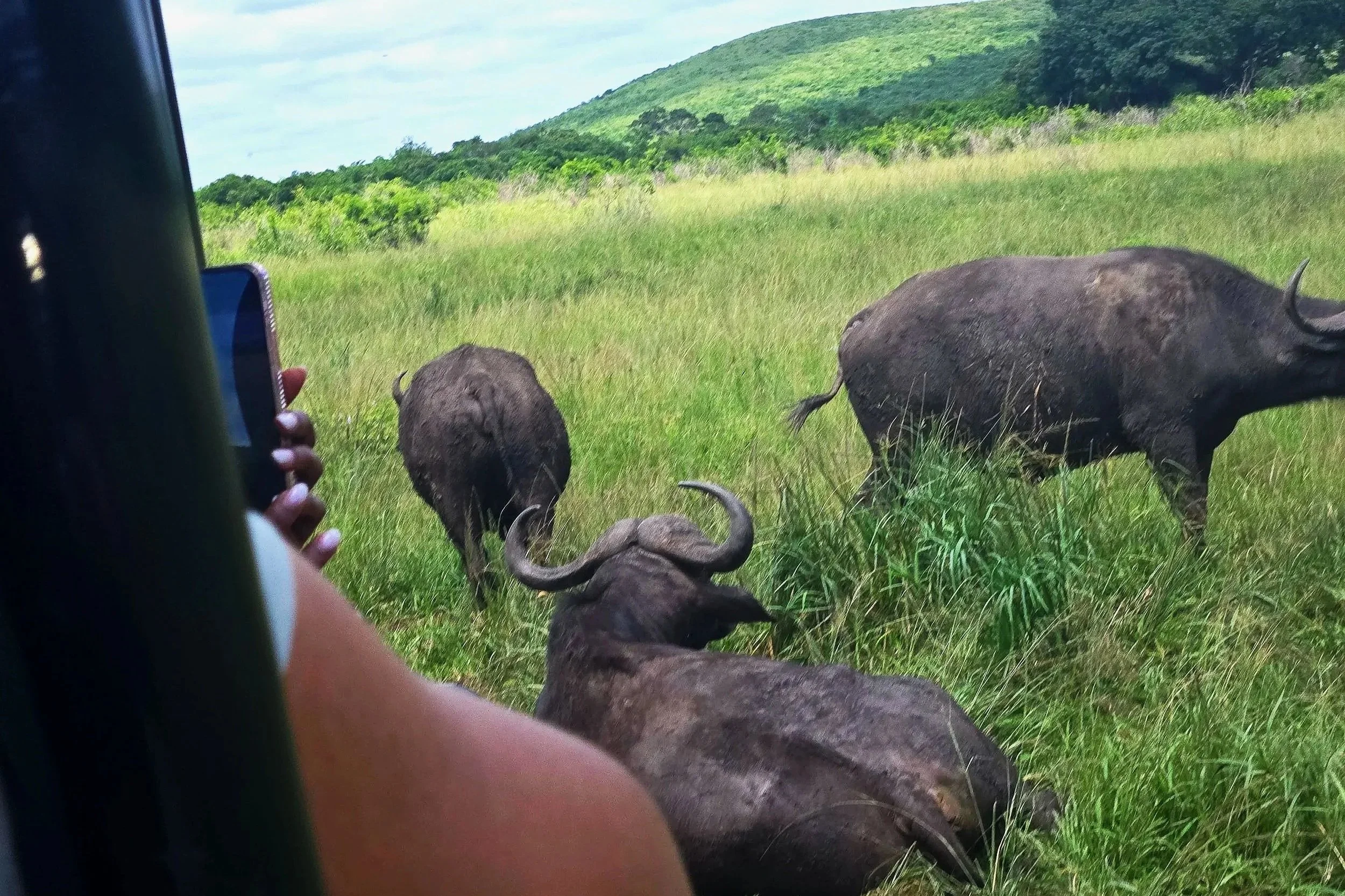
Cape buffalo in the early morning light.
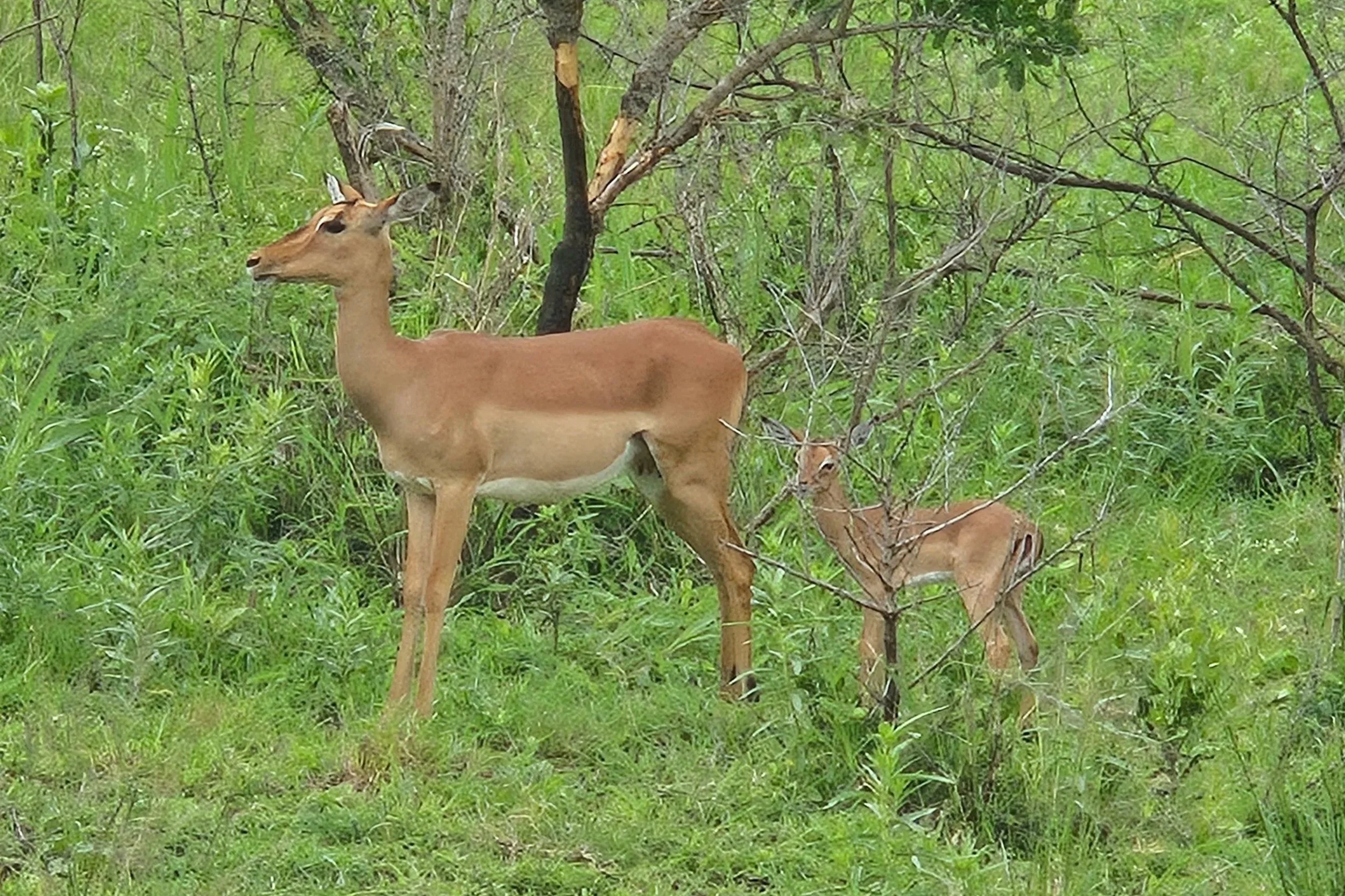
An impala and its young.
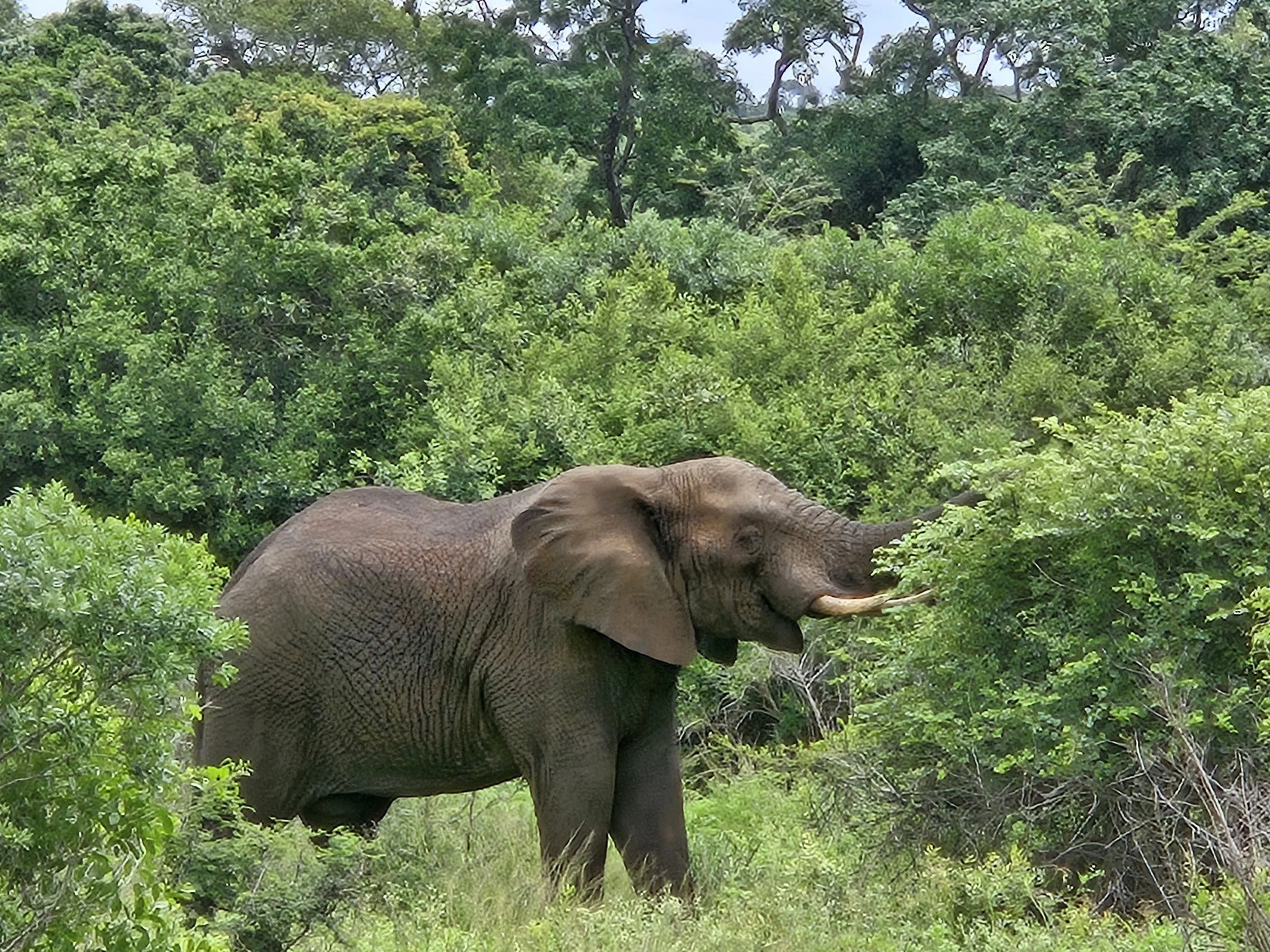
One of several unforgettable elephant encounters.
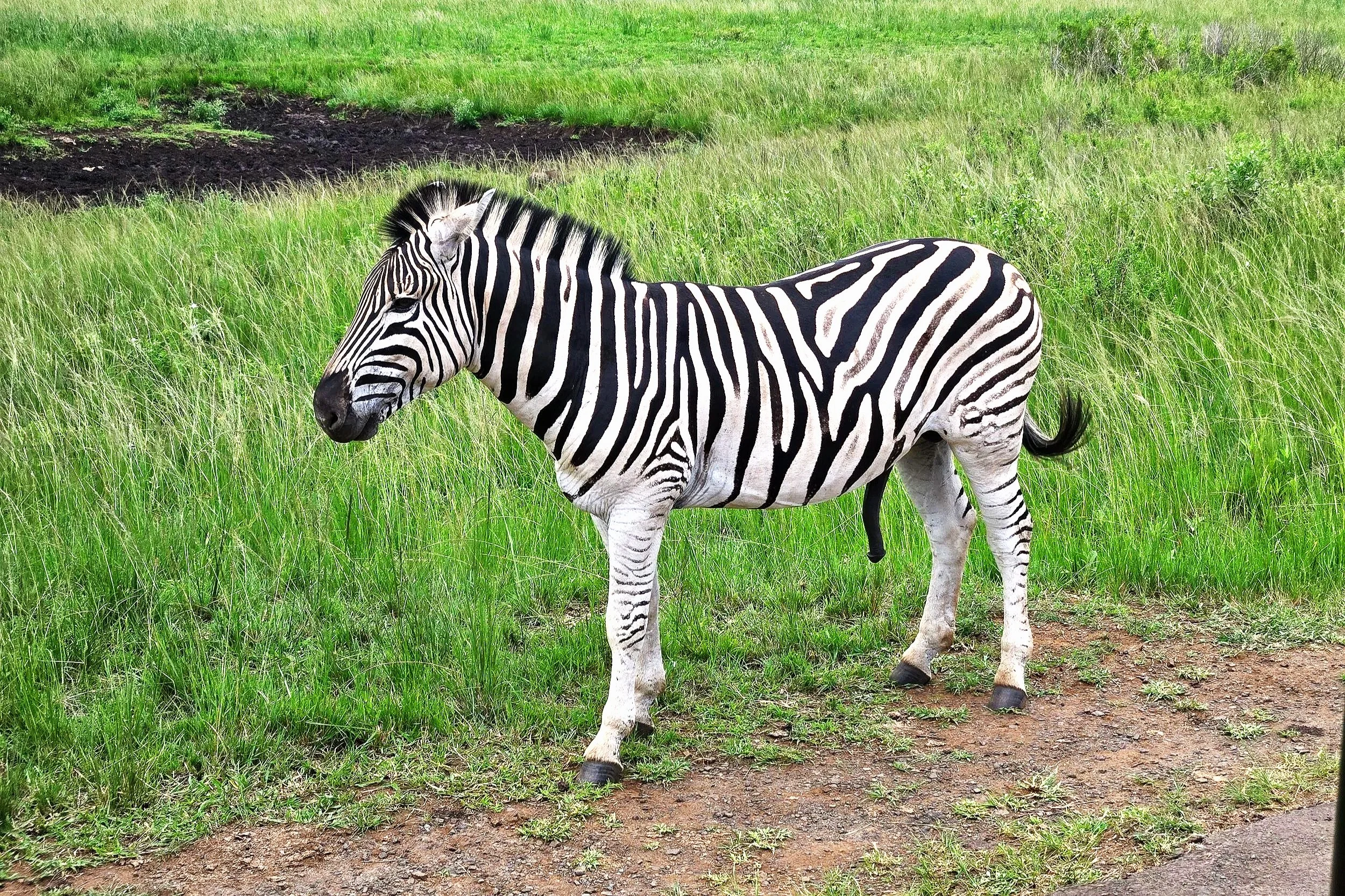
Wildlife here behaves entirely on nature’s timetable.
Ironically, missing the lions became one of my favorite memories.
One thing that struck me most wasn’t the wildlife itself—it was how few other vehicles we encountered. Having travelled in parks where sightings can attract long queues of safari vehicles, Hluhluwe-iMfolozi felt refreshingly unhurried. It reminded me that the finest safari experiences aren’t necessarily those where you tick off the Big Five as quickly as possible. They’re the ones where you genuinely feel like a guest in the animals’ world.
A Different Kind of Safari
If Hluhluwe-iMfolozi showcases South Africa’s grasslands, iSimangaliso Wetland Park demonstrates just how varied KwaZulu-Natal really is. South Africa’s first UNESCO World Heritage Site offers a safari experience unlike any other.
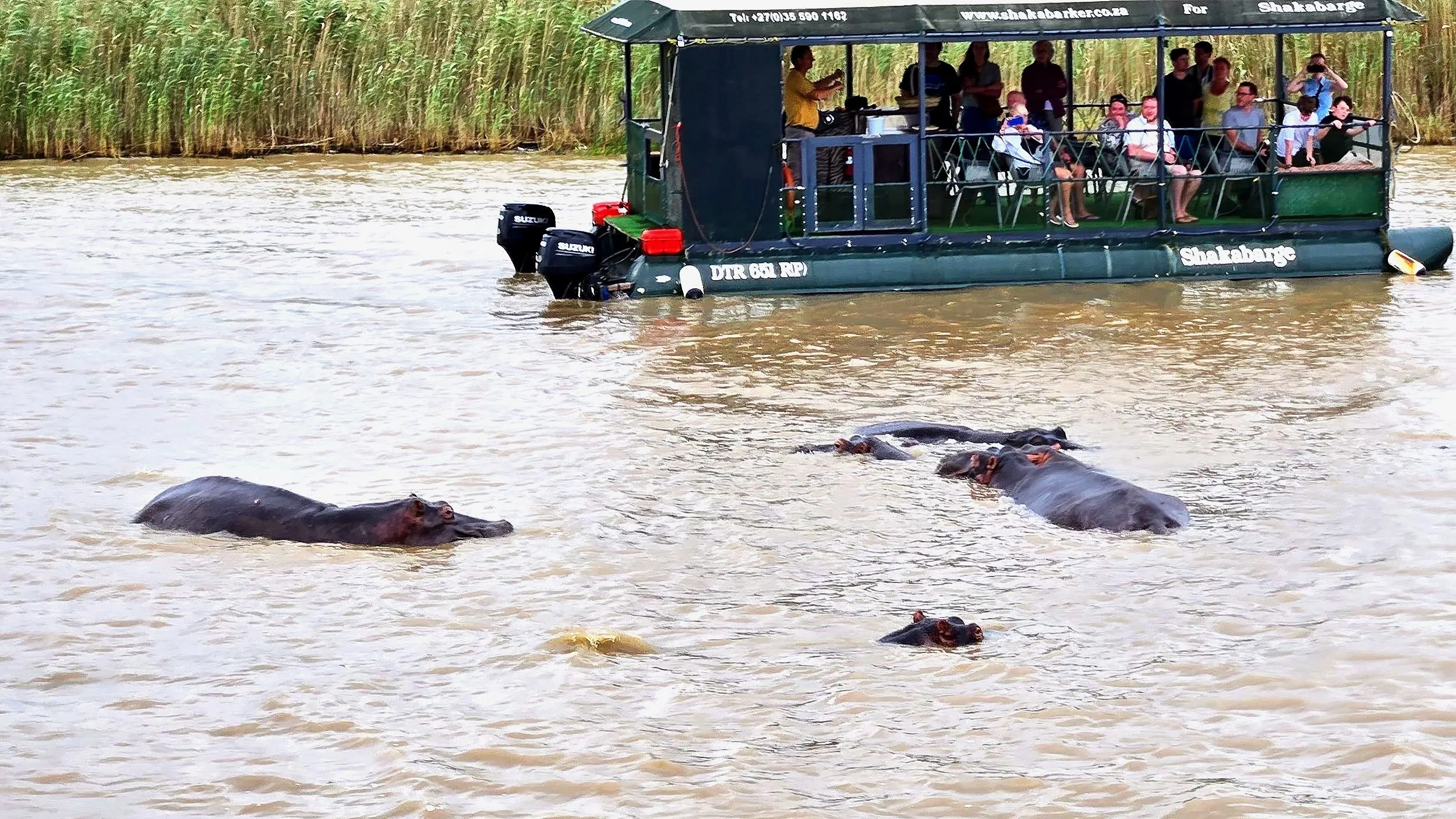
Cruising through the wetlands with Hippos surfacing at iSimangaliso.
Our guide, Mike, explained why hippos are among Africa’s most dangerous animals despite their deceptively calm appearance, before entertaining us with the extraordinary story of Pablo Escobar’s imported hippos, whose descendants still roam parts of Colombia today. Then the wildlife took over as dozens of hippos surfaced around the boat while crocodiles rested quietly along the shoreline.
It reinforced something I hadn’t really appreciated before this trip: safari isn’t simply about driving around looking for lions. Some of the most memorable wildlife encounters happen from the water.
The Durban I Wasn’t Expecting
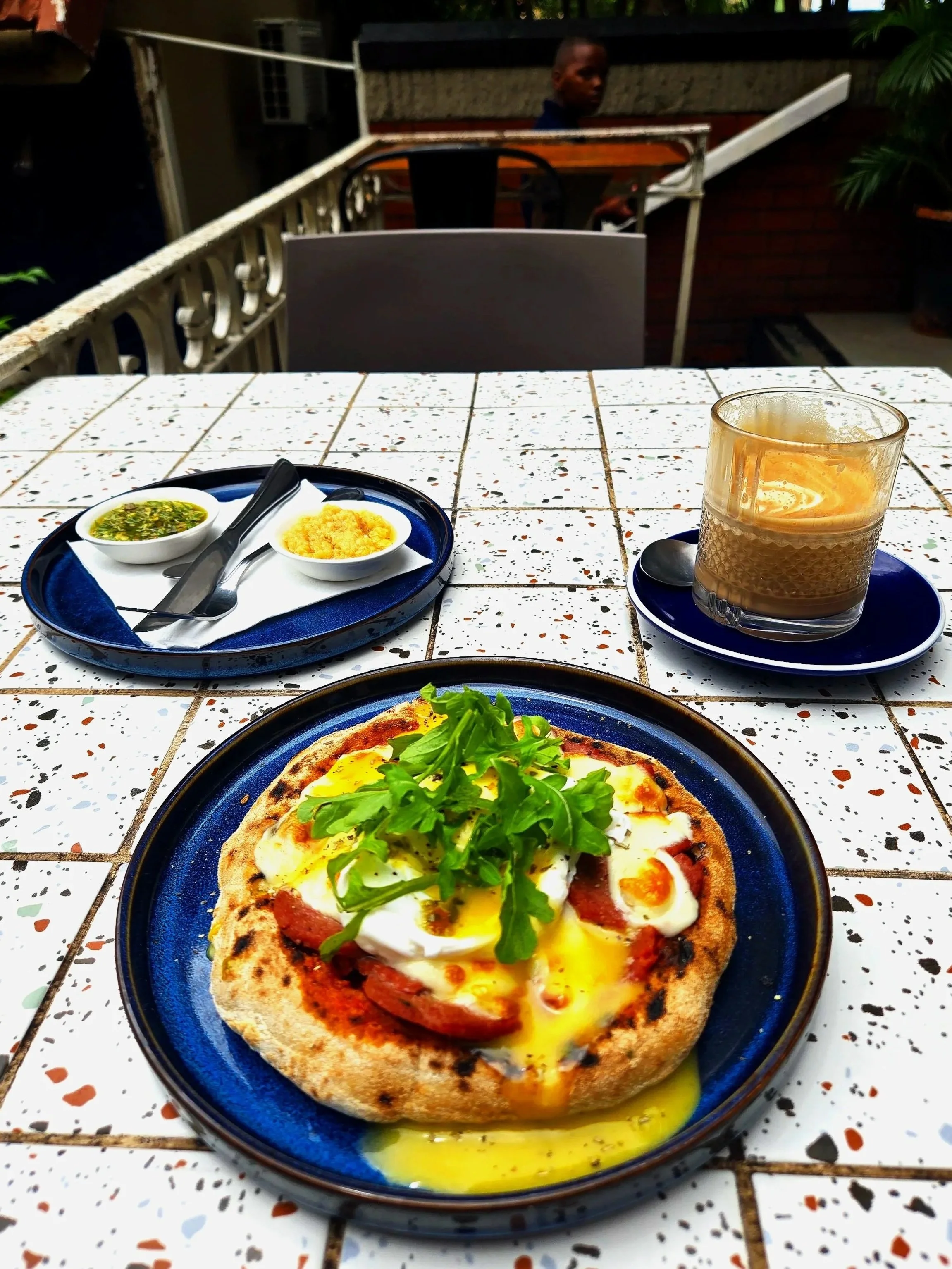
A leisurely breakfast on Durban’s most charming street.
Like many visitors, I assumed Durban’s beaches would be the highlight. Instead, I found myself recommending Florida Road.
After several days immersed in wildlife, Florida Road provided exactly the contrast I wasn’t expecting. Mature trees shade the pavements, independent cafés spill onto the streets, and boutique shops replace the international chains found in so many cities. Rather than feeling like another tourist attraction, it felt like a neighbourhood where locals genuinely spend their weekends.
One discovery was OCC Clothing Co., a proudly South African clothing brand producing beautifully designed collections while supporting orphanages and local community initiatives. It’s exactly the sort of business I enjoy recommending to clients because it’s the kind of place you rarely discover from a guidebook.
A short stroll away, Jameson Park offers expansive lawns and mature trees that reminded me of an English park. Its pavilion is beginning to show its age, but rather than detracting from the experience, it serves as a reminder that Durban remains an authentic South African city rather than one polished exclusively for visitors.
Why KwaZulu-Natal Is About to Change
One reason I believe KwaZulu-Natal’s profile is about to rise significantly is the opening of Club Med South Africa Beach & Safari this month. Until now, the province has lacked an internationally recognised premium all-inclusive resort capable of anchoring a luxury holiday. Club Med changes that and, in my view, will introduce an entirely new audience to the region.
Guests spend a minimum of three nights at the beach resort and can then optionally add a two-night stay at Club Med’s dedicated Big Five safari lodge, approximately four hours away by road. It isn’t a day excursion, nor should it be. Properly planned, it creates an excellent two-centre holiday that combines beach relaxation with an accessible introduction to safari.
Travellers seeking a more traditional safari experience, however, would still be better served staying at one of the excellent lodges around Hluhluwe-iMfolozi. Knowing which option suits which traveller is exactly where good itinerary planning makes all the difference.
What I Would Recommend
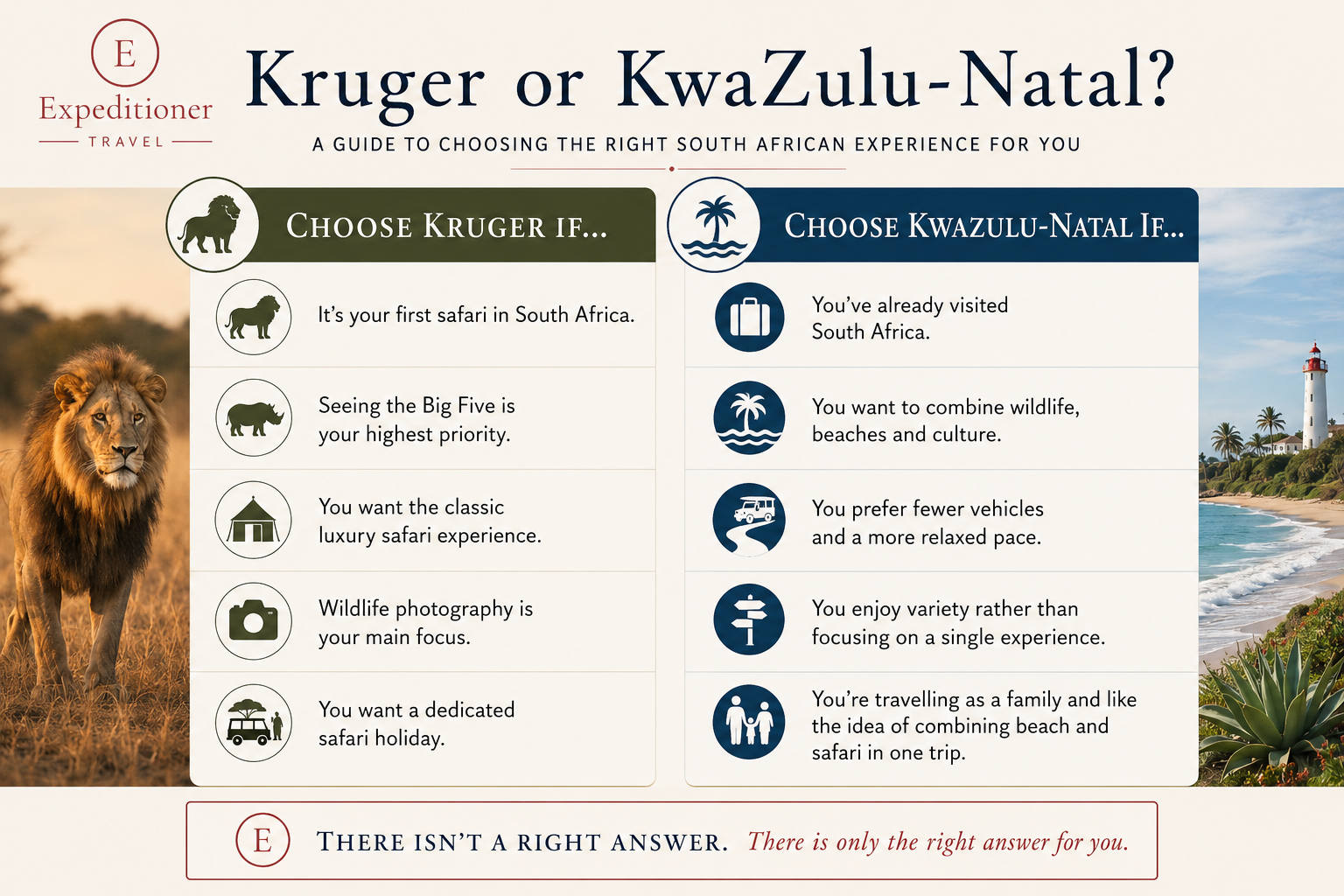
For a first visit to South Africa, I would still recommend Cape Town and Kruger. They’re classics for a reason.
However, if you’ve already experienced that itinerary—or simply want something beyond the obvious—I would seriously consider spending five or six nights in KwaZulu-Natal instead.
That provides enough time to experience Hluhluwe-iMfolozi, iSimangaliso, Durban and either the new Club Med resort or one of the excellent safari lodges in the region without rushing from place to place.
With twelve to fourteen days, I would then add Victoria Falls, creating one of the most varied Southern African itineraries available.
“My advice is simple: choose Kruger for your first South African safari. Choose KwaZulu-Natal when you’re looking for a broader holiday that combines wildlife, coastline and culture. That’s the recommendation I would make to most returning visitors today.”
Why First-Hand Experience Matters
The more I travel, the less interested I become in simply visiting famous places. Instead, I look for destinations that genuinely improve an itinerary.
KwaZulu-Natal is one of them.
A year ago, I probably wouldn’t have recommended it to many clients. Today, I find myself recommending it surprisingly often—not because it’s better than Kruger, but because, for the right traveller, it offers something Kruger cannot: a richer combination of safari, coastline, culture and contemporary resort experiences.
That’s why I continue travelling myself. The best travel advice doesn’t come from brochures or social media. It comes from having the confidence to challenge your own assumptions. At Expeditioner Travel, that’s exactly how we design every journey: not by sending clients to the most famous destinations, but by matching the right destinations to the right traveller. Contact us today!
And sometimes, that means recommending KwaZulu-Natal over Kruger.
If a southern Africa trip is taking shape, here are two useful next steps.
How we plan trips like this Talk to Marc
